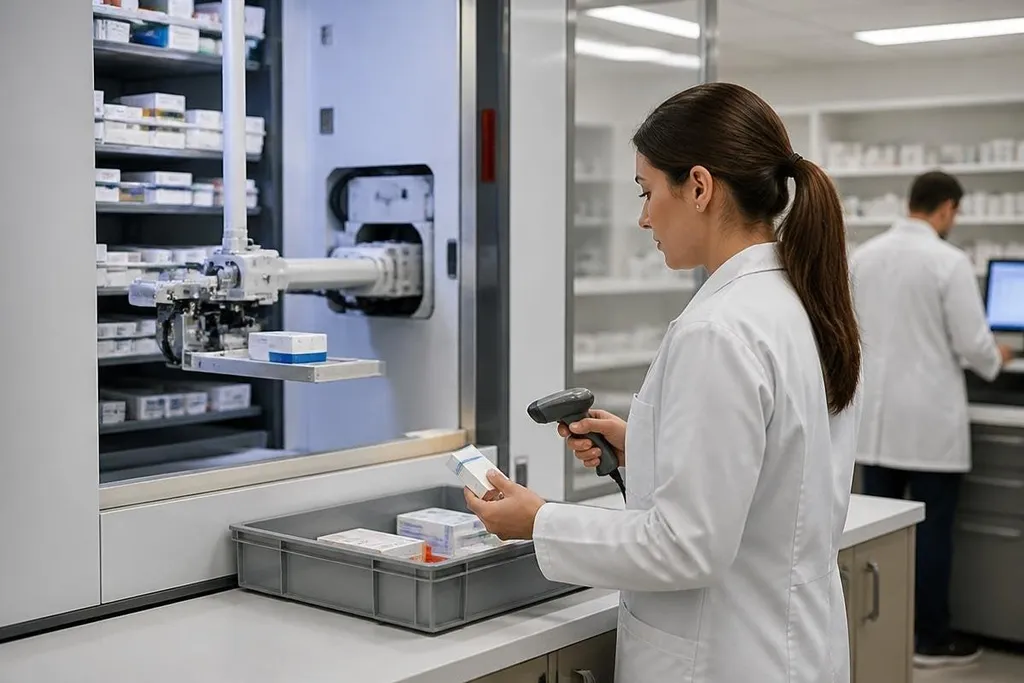
Pharmacy robots can store medicines, read prescription data, and pick the ordered item without a person reaching into a shelf. That may cut errors linked to selection and labeling, but only when the pharmacy checks the robot’s work at the right points.
- Barcode scans can check the drug and strength before dispensing.
- Automated storage can keep fast-moving medicines in known locations.
- A pharmacist still needs to check the order, patient, and instructions.
Where a robot can help
Many medication errors start during routine handling. A person may select the wrong drug, choose the wrong strength, read a label incorrectly, or place a similar package in the wrong bin. A robot can add a scan at the point where the medicine leaves storage.
The scan compares the package code with the prescription record. If the code does not match, the system can stop the order for a staff member to check. That creates a clear pause instead of letting a wrong item move straight to the patient.
Automated storage can also record where each package goes. The pharmacy can then ask the system to retrieve a specific product, strength, and quantity. This works best when staff load the bins correctly and remove expired stock on schedule.
The steps that still need people
A robot reads data. It doesn't decide if the prescription makes sense for the patient. A pharmacist must still check the drug, dose, route, timing, allergies, and other medicines when those details are part of the review.
The robot also depends on clean prescription data. A wrong strength entered into the system can produce a correctly picked wrong medicine. That is a software and review problem, not a shelf problem.
Packaging creates another limit. A robot may handle sealed boxes or standard unit-dose packs well, but unusual shapes, loose tablets, split packs, and refrigerated medicines can need separate handling. The pharmacy must test those cases before putting the system into daily work.
What changes for pharmacy staff
The main change is where people spend their time. Staff may do less shelf searching and manual counting, then spend more time checking exceptions, restocking bins, and reviewing orders the robot has stopped.
That shift can help a busy pharmacy if the exception queue stays small and clear. If the robot stops too many orders, staff may bypass the process or work around it. The safety gain then depends on training, screen design, and a clear rule for who resolves each stop.
An order that stops still needs a clear record of what staff checked and why. Reports on pharmacy robots from Robot24.com can place those details beside claims about fewer medication errors, leading into the measures a pharmacy should track.
The pharmacy should also track errors before and after installation. Useful measures include wrong-item picks, label corrections, missed stock checks, robot stops, and the time staff spend fixing each case.
Without that record, a smoother-looking workflow can hide problems.
What the pharmacy must verify
The strongest case for a robot comes from a narrow task with a clear check. A pharmacy should ask the supplier to show the full workflow, starting with prescription entry and ending at the final handoff, including failed scans and damaged packaging.
Use this checklist before signing a purchase order:
- Map the workflow: record every handoff from prescription review to patient collection.
- Test normal stock: run common drugs, strengths, pack sizes, and quantities through the system.
- Test awkward stock: include split packs, look-alike packaging, refrigerated items, and returns.
- Set scan rules: decide which mismatches stop an order and who checks them.
- Measure the baseline: count picking errors, corrections, stops, and manual checks before launch.
- Plan the fallback: keep a safe manual process for power loss, network failure, or robot downtime.
The limit that decides the purchase
The robot can reduce medication errors at the storage and picking stages. It cannot replace prescription review, clean data, or staff checks. I'd buy one only when the supplier can show its failure handling with the pharmacy's real stock, not a small set of easy packages.
The useful result will appear in the pharmacy's own records: fewer wrong picks without a rise in missed checks, delayed orders, or manual work.